
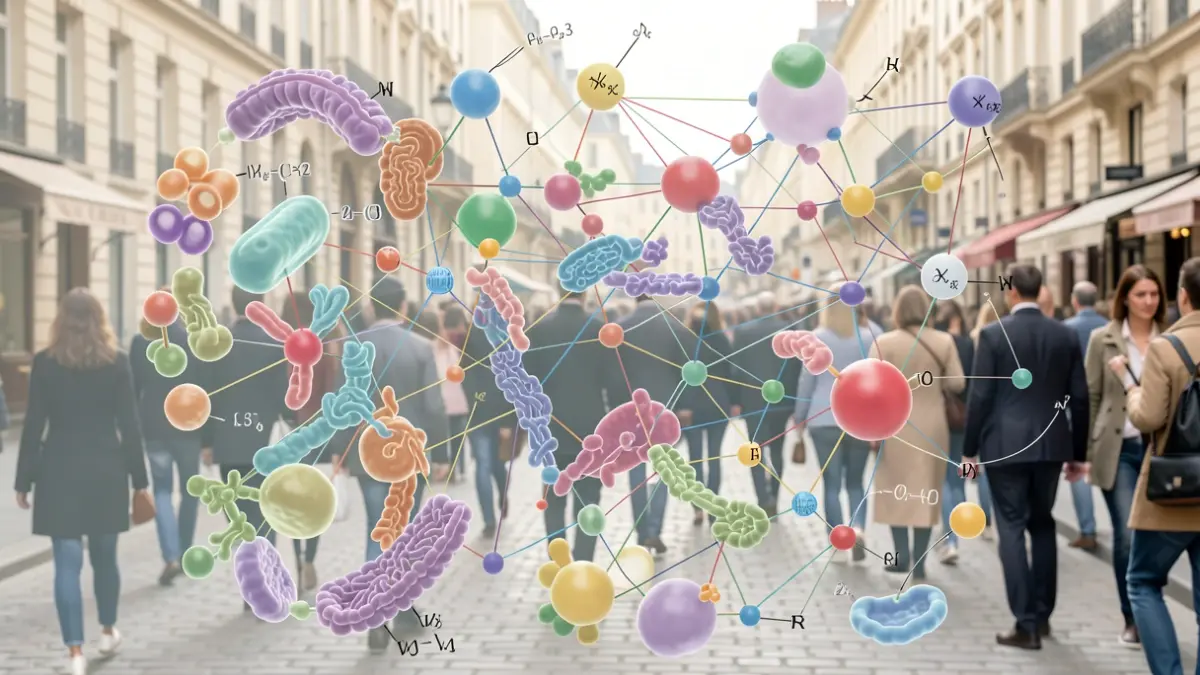
The research, with first-phase results published in August in the scientific journal Microbiome, uses a mathematical model to integrate clinical data with microbial biodiversity. The aim is to identify microorganisms and their interactions associated with a healthy, protective microbiome, or with imbalances that favor disease.
The model assesses a microbiome's resistance to invasion by potentially harmful microorganisms, considering the diversity and proportion of its components. This concept can be applied to other microbiome instances or multi-species biological systems.
The study involves Tomás Freire, a doctoral student in Mathematics at Técnico, and Marina Garcia-Romero, a master's student who joined Técnico in 2025 through a mobility program.
Alterations in the vaginal microbiome are linked to bacterial vaginosis and increased susceptibility to infections. Understanding the resistance of certain microbial communities could, in the future, help find better ways to maintain or restore a healthy microbiome, contributing to reproductive health.
“"The main limitation of our study is that we still lack a model explaining how each person's specific factors, environmental factors, and genetics can influence the coefficients relating different groups of microorganisms to pathogenic microorganism invasion capacity and health."
As a next step, the team plans to apply the same model to more comprehensive datasets to identify variation patterns associated with each person's age, diet, behaviors, or genetics.
The Center for Computational and Stochastic Mathematics (CEMAT), associated with Técnico, conducts research in mathematics and computational modeling applied to biomedicine, aiming to understand diseases and complex biological processes like infections, antibiotic resistance, and cancer, and to develop predictive models for new prevention and treatment strategies.