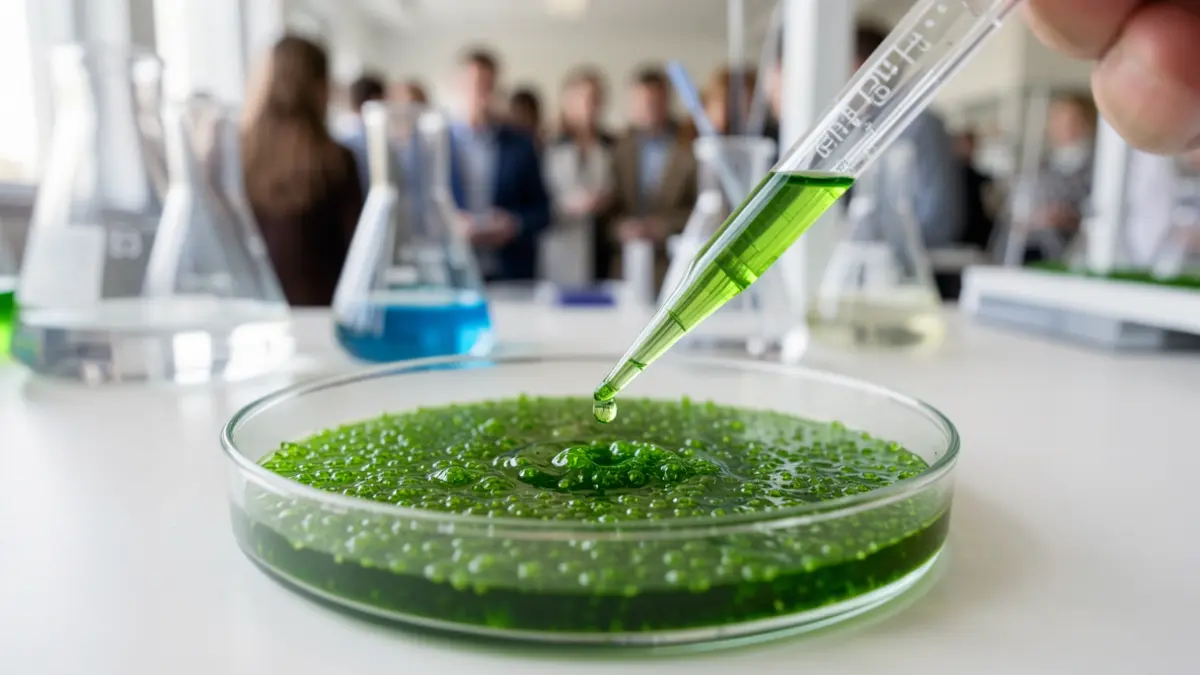
The PREMIUMALGAE project, led by Necton and supported by COMPETE 2030, aims to create four new high-value ingredients from microalgae. Two compounds will be derived from the biomass, rich in fucoxanthin and phycoerythrin, while the others will result from the valorization of supernatants, based on exopolysaccharides and extracellular vesicles.
The initiative, which brings together companies and scientific institutions, is based on the logic of utilizing resources with low economic value and transforming them into products with industrial potential. "We seek to valorize components that remain present in the biomass and supernatants but were not traditionally utilized," explains Maria Teresa Cruz, an associate professor at the Faculty of Pharmacy of the University of Coimbra.
The potential extends to areas such as nutrition, health, cosmetics, and aquaculture. The challenge lies in developing efficient extraction, separation, and purification processes for industrial-scale production, optimizing microalgae cultivation and using technologies like ultrafiltration and selective precipitation.
The research includes in vitro, ex vivo, and in vivo trials to assess the bioactivity and safety of the obtained compounds, as well as stability studies. The first prototypes will be developed with strategic partners such as Azores Life Science and Sparos.
"The objective is to promote maximum utilization of the produced biomass, reducing waste and increasing the value generated throughout the process," emphasizes Maria Teresa Cruz.
The consortium also includes the University of Porto (Faculties of Pharmacy and Sciences), the University of Aveiro, the University of Coimbra, and GreenCoLab. The collaboration between companies and scientific entities brings together expertise in biotechnology, pharmacology, analytical chemistry, and process engineering.