The SIMATRIX project, which brings together industry and science, aims to revolutionize the manufacturing of extrusion and pultrusion tools. Currently, the production of dies for complex profiles can require up to 15 attempts, a process costly in time, materials, and resources. SIMATRIX aims to reduce this number to just two or three by using computer simulation to predict and optimize material and process behavior.
Led by SIMATRI – Sistemas de Maquinação Tridimensional, Lda., a manufacturer of molds and tools, the consortium includes Faria & Morouço, S.A., specializing in plastic transformation by extrusion. Both companies are based in Maceira, in the municipality of Leiria. The project also involves the Instituto Superior de Engenharia do Porto, PIEP – Associação Pólo de Inovação em Engenharia de Polímeros, and the Universidade do Minho.
The die, the tool that shapes the profile, makes predicting polymer behavior complex, especially with intricate geometries or continuous fiber reinforcements. Traditional development relies on empirical experience, with test-and-correction cycles that delay production. SIMATRIX responds with advanced numerical modeling to simulate polymer flow, fiber impregnation, and process stability, allowing virtual design optimization before machining.
“The ability to simulate tool behavior before machining profoundly alters the development process. It allows us to anticipate problems, reduce corrections, and reach a reliable industrial solution faster,” explains Pedro Rodrigues, manager of SIMATRI and CEO of Faria & Morouço, S.A..
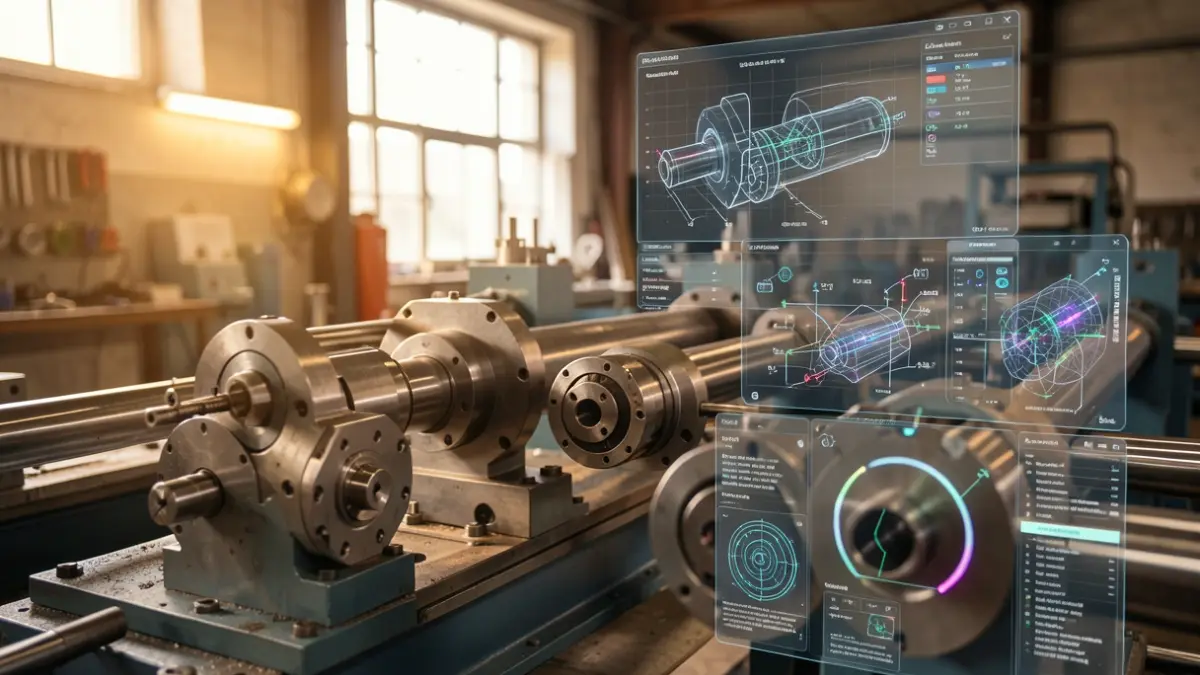
The new dies will be equipped with sensors to collect production data, which will be cross-referenced with simulations using artificial intelligence. The result will be hybrid digital twins, virtual replicas integrating physical models and real-time information, enabling defect anticipation and optimization of manufacturing conditions.
The project applies this methodology to continuous fiber extrusion and thermoplastic pultrusion. In pultrusion, it aims to demonstrate a process with at least 80% recycled polymer and glass fiber, targeting 100% recyclable profiles with performance equivalent to virgin polymer.
Initial applications focus on the construction sector (window profiles, frames, facades), with potential expansion to transportation and the aerospace industry. The project represents an opportunity for the national mold and tool industry to advance in the value chain, competing on knowledge and reliability.
“The support from COMPETE 2030 allows us to bring together industrial and scientific expertise that would be difficult to mobilize in isolation,” emphasizes Pedro Rodrigues. The project, running until the end of 2028, aims to demonstrate Portugal's capability in developing intelligent industrial tools and sustainable composite profiles.